Choosing Padded Wall Headboard Panels in 2026 involves more than matching fabric to a bedroom palette. The right system should support comfort, sound control, maintenance, safety, and long-term value. Charles Eames, a respected furniture and interior design pioneer, said, “The details are not the details. They make the design.” That principle applies directly to panel thickness, seam placement, edge finishing, mounting hardware, and fabric performance.
This buying guide examines how these panels work in real bedrooms, hospitality spaces, and compact apartments. It considers panel dimensions, foam density, backing materials, acoustic behavior, moisture resistance, cleaning requirements, and installation methods. A soft panel may reduce echoes, but it should not be treated as a complete acoustic solution. Room size, wall construction, windows, and floor finishes still matter.
Measure carefully.
A beautiful installation can fail when outlets become inaccessible or bedside tables collide with thick panels. That mistake is common. It is also avoidable. Buyers should request material samples, test color under warm lighting, and confirm fire-performance documentation before ordering. Supplier warranties, replacement options, and lead times deserve equal attention.
This guide also recognizes an imperfect reality: online photographs rarely show true texture, compression, or seam alignment. Colors may shift between screens and physical fabric. Reliable decisions require written specifications, clear installation drawings, and honest supplier communication. By comparing performance with appearance, readers can select Padded Wall Headboard Panels that feel refined, remain practical, and fit the room’s actual demands.
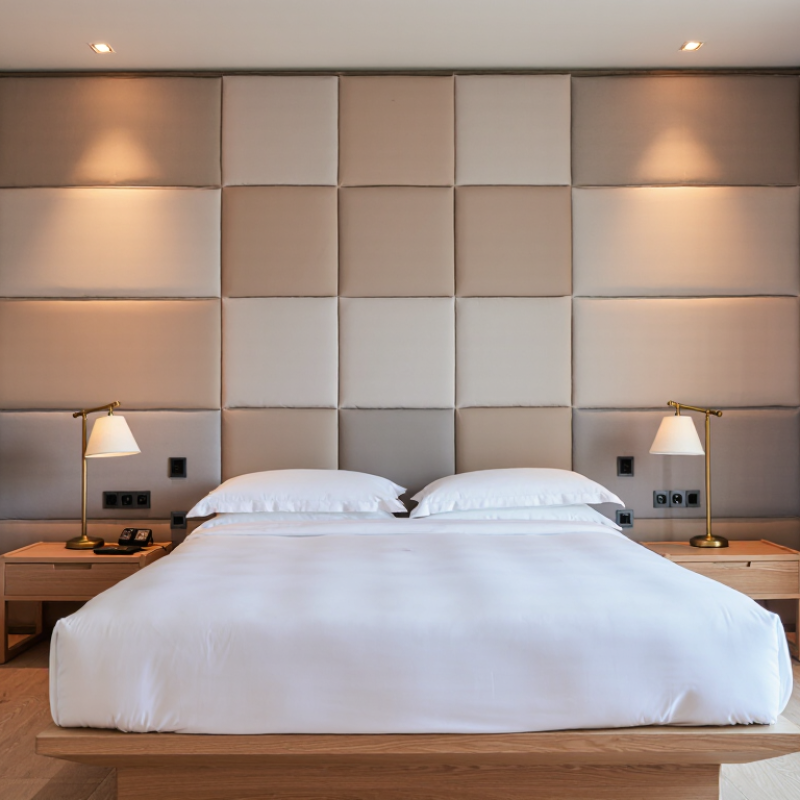
Padded wall headboard panels combine a rigid backing, cushioning foam, fiber layers, and a fabric cover. They mount directly to the wall, creating a continuous upholstered surface behind the bed. Unlike a freestanding headboard, this design can cover one section or the entire wall. It also supports flexible layouts, including vertical channels, square modules, and full-width arrangements.
The comfort benefit is immediate. A padded surface feels warmer against the back during reading and reduces contact with a hard wall. It may also soften minor reflections, although it should not be treated as certified soundproofing. Fortune Business Insights valued the global acoustic panels market at about US$10.17 billion in 2023. That growth suggests stronger interest in softer, quieter interiors, but acoustic performance depends on thickness, spacing, and installation.
Market demand is expanding beyond appearance. Grand View Research estimated the global upholstered furniture market at roughly US$40 billion in 2022, with continued growth expected through 2030. For buyers, professional specifications matter more than photographs. Check foam density, cover composition, wall anchors, cleaning instructions, and fire-test documentation. Ask whether the panel resists compression after repeated use. Some attractive panels flatten sooner than expected. I have found that this detail is often overlooked. Clearance behind the bed also matters, especially in small rooms. A few centimeters can affect ventilation, bedding movement, and final comfort.
| Panel Type | Typical Construction | Common Thickness | Main Benefits | Best Use | Important Considerations |
|---|---|---|---|---|---|
| Fabric-Wrapped Foam Panel | Textile cover over resilient foam, usually fixed to a rigid backing board. | Approximately 25–75 mm | Soft surface, comfortable back support, broad fabric color selection, and moderate sound absorption. | Bedrooms, reading areas, guest rooms, and residential feature walls. | Check fabric abrasion resistance, seam quality, foam resilience, and cleaning instructions. |
| Acoustic PET-Felt Panel | Decorative textile surface made from compressed polyester fiber, often with an acoustic backing. | Approximately 12–50 mm | Lightweight, easy to cut, resistant to fraying, and effective at reducing reflected mid-to-high frequency sound. | Modern bedrooms, home offices, studios, and contemporary interiors. | It provides absorption rather than complete soundproofing; verify fire-performance documentation where required. |
| Upholstered MDF or Plywood Panel | Fabric, leather, or synthetic covering applied over foam and a wood-based structural panel. | Approximately 30–100 mm | Rigid, durable, visually substantial, and suitable for larger custom panel layouts. | Full-width headboards, hospitality-style bedrooms, and high-contact areas. | Heavier than foam-only systems; wall anchors and load-bearing capacity must be checked before installation. |
| Leather or Synthetic-Leather Panel | Foam padding covered with natural leather or a coated synthetic upholstery material. | Approximately 25–75 mm | Smooth appearance, wipe-clean surface, strong visual impact, and good resistance to everyday contact. | Master bedrooms, boutique-style interiors, and spaces requiring easy surface cleaning. | Protect from direct sunlight and excessive heat; use only cleaning products approved for the covering. |
| Tufted Upholstered Panel | Deep-button, channel, or diamond tufting formed through foam, upholstery, and a rigid or semi-rigid backing. | Approximately 50–150 mm | Adds depth, cushioning, texture, and a traditional or luxury visual style. | Classic bedrooms, statement walls, and decorative hospitality interiors. | Tufting increases dust-collection points and may require more careful vacuuming and spot cleaning. |
| Modular Tile Panel | Small, repeatable padded units installed individually or in coordinated rows and columns. | Approximately 20–75 mm | Flexible layout, easier replacement of individual pieces, and simpler handling in narrow rooms or stairways. | Rental homes, adaptable interiors, and installations requiring phased assembly. | Accurate alignment is essential; visible gaps and inconsistent spacing can affect the finished appearance. |
| Buying Dimension | What to Check | Practical Guidance |
|---|---|---|
| Panel Dimensions | Overall wall width, mattress width, ceiling height, outlets, switches, and bedside furniture. | Measure the wall in several places and confirm whether the panel should align with the bed, nightstands, or the full feature wall. |
| Foam and Cushioning | Foam thickness, resilience, edge support, and compression recovery. | Thicker foam generally improves comfort, but it also increases projection from the wall and may require stronger fixings. |
| Covering Material | Abrasion resistance, colorfastness, stain resistance, texture, and seam construction. | Choose removable or cleanable coverings for high-contact rooms, children’s rooms, and frequently used guest spaces. |
| Acoustic Performance | Absorptive material, panel thickness, air gap, and coverage area. | Padded panels can reduce echo and reflected noise, but they do not replace wall insulation or provide complete soundproofing. |
| Installation Method | Cleats, screws, brackets, adhesive, removable mounting systems, and wall substrate. | Use fixings suitable for drywall, masonry, timber, or other substrates. Heavy panels should not rely on unsuitable adhesive alone. |
| Safety and Compliance | Fire performance, material emissions, secure attachment, and clearance from heat sources. | Request relevant test documentation for commercial or regulated projects and keep panels away from heaters, flames, and exposed heat sources. |
| Maintenance | Vacuuming method, spot-cleaning requirements, removable covers, and replacement availability. | Vacuum fabric gently, treat spills promptly, avoid oversaturation, and follow the care label for the specific covering. |
| Sustainability | Recycled content, repairability, removable coverings, packaging, and end-of-life options. | Prefer durable construction, replaceable components, low-waste packaging, and documented material information. |
They combine a rigid backing, cushioning foam, fiber layers, and fabric. They attach directly to the wall behind a bed.
Their soft surface feels warmer during reading. It reduces contact with a hard wall. Small comfort changes matter.
No, they should not be treated as certified soundproofing. They may soften minor reflections, depending on thickness, spacing, and installation.
High-density foam offers firmer support and better resistance to early flattening. Plywood or engineered wood backing improves stability on uneven walls.
Measure the bed, wall height, and nearby furniture. Panels usually look balanced when extending beyond the mattress. Measure twice.
Large rectangles create a calm appearance with fewer seams. Smaller squares add rhythm. Curved or arched panels soften hard architectural lines.
Tight woven fabric handles daily contact better than delicate weaves. Velvet can show pillow pressure marks. Performance fabric may resist stains, but textures vary.
Request physical fabric samples and inspect them under different lighting. Check foam density, seam alignment, anchors, cleaning instructions, and safety documents.
Yes, some attractive panels flatten sooner than expected. Ask about compression resistance after repeated use. I once chose thin backing, and corner panels flexed.
Leave enough clearance behind the bed for ventilation and bedding movement. A few centimeters can change comfort. The perfect layout is rarely perfect.
This 2026 buying guide explains how Padded Wall Headboard Panels can enhance a bedroom by adding softness, insulation, visual interest, and support. It explores how to choose suitable materials, dimensions, shapes, colors, and upholstery based on sleeping habits, room size, décor style, and personal comfort. Readers will also learn how different installation methods, such as adhesive mounting, wall fixing, or modular attachment, affect room fit, flexibility, safety, and long-term use.
The guide also highlights important considerations for durability, cleaning, stain resistance, fire-safety awareness, and maintenance requirements. It explains how to evaluate whether a panel design complements existing furniture and how to balance appearance with practical performance. Before purchasing, buyers should compare total costs, supplier reliability, customization options, delivery details, warranties, and installation support. By reviewing these factors carefully, homeowners can select Padded Wall Headboard Panels that provide lasting comfort, dependable functionality, and a cohesive bedroom design.