Made-to-Order Craftsmanship · Flexible Sizing · Nationwide Delivery Across Indonesia
0%

Finding the right supplier for Commercial Custom Furniture in China takes more than comparing prices. A hotel lobby may need a curved reception desk, while a restaurant needs chairs that withstand daily use and frequent cleaning. Clear requirements help suppliers quote accurately and reveal whether they understand the project.

China has manufacturers with different capabilities, from upholstery and woodworking to metal fabrication. Some factories manage production directly; others coordinate several workshops. That difference can affect lead times, communication, and quality checks. Small details matter. Specify dimensions, materials, finishes, expected quantities, and delivery requirements before requesting a quote. A photo of a wood finish or upholstery swatch can prevent a costly misunderstanding.

This guide outlines practical ways to identify and assess potential suppliers. It covers where to search, what to ask during initial discussions, and how to review samples, production capacity, and quality-control practices. Request itemized quotations and confirm what each price includes. Ask for recent project examples, but verify that they match the supplier’s actual work. A video call can show machinery and active production; it cannot replace an independent inspection when the order warrants one.

No single checklist guarantees a smooth project. Specifications may change, and a sample may not fully reflect a production run. Keep written records, agree on approval steps, and allow time for revisions. Careful verification takes effort, but it gives buyers a more realistic basis for choosing a dependable partner.
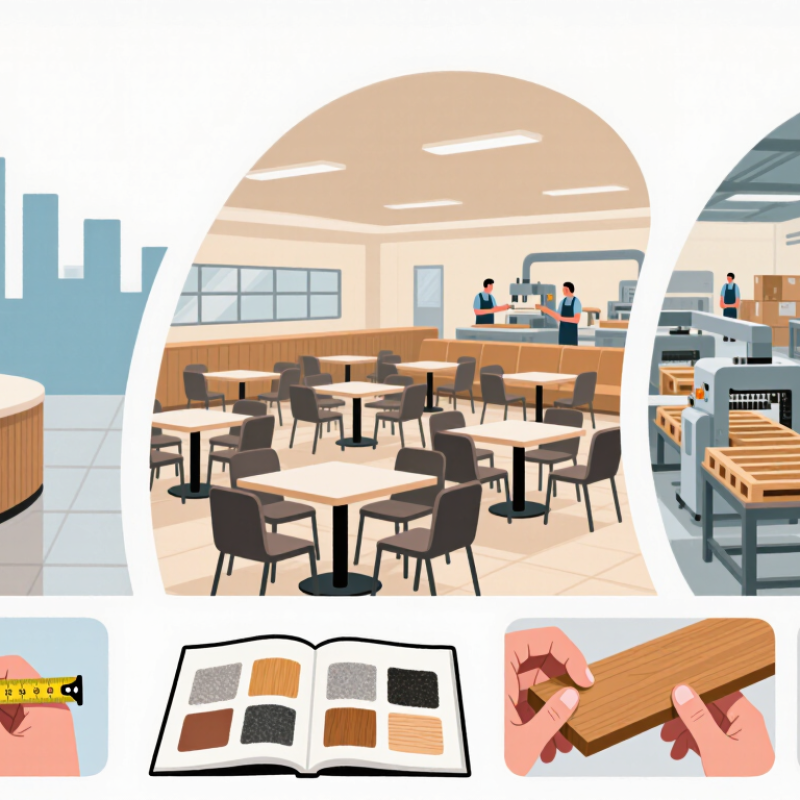
How to Find Commercial Custom Furniture Suppliers in China?

Define Your Commercial Furniture Project Requirements

Before contacting commercial custom furniture suppliers in China, turn the project brief into measurable requirements. Record the room dimensions, ceiling height, doorway widths, and installation access. Add a floor plan with furniture locations and clear walking routes. A reception desk that fits on paper may still block a door.

Specify the intended users and daily workload. A hotel lobby, clinic waiting area, and restaurant need different seating, cleaning routines, and durability. Note expected quantities, preferred materials, color references, weight limits, and any storage or cable-management needs. For example, a café table may need a wipe-clean top and stable legs on uneven flooring. Include target pricing, order volume, delivery location, and installation expectations. These details help suppliers assess feasibility and quote comparable options. Ask for drawings, material samples, and confirmation of dimensions before production. Photos can clarify the look, but they cannot replace written measurements.

Some decisions will change as the design develops. That is normal. Mark confirmed requirements separately from preferences, and identify acceptable alternatives. A fixed material choice may raise cost or extend lead time, while a flexible finish can widen sourcing options. I would not assume a supplier understands terms like “commercial grade” without a test method or clear specification. Be precise, but leave room for practical feedback.

Identify Suitable Supplier Types and Manufacturing Regions in China

Commercial furniture sourcing in China works best when the supplier type matches the project. A direct factory can offer closer control over dimensions, finishes, and production schedules. It may be a good fit for repeat orders or substantial quantities. A trading company can coordinate several product categories, but ask which workshop will make each item. Project furnishing contractors may handle drawings, production, packing, and installation coordination. That convenience can come with less direct factory contact. Ask for recent project photos, material samples, and a clear list of what the supplier makes in-house. Small details matter.

Manufacturing regions offer useful starting points. Foshan and nearby parts of Guangdong have dense furniture and materials networks, making them practical for mixed product ranges. Anji in Zhejiang is well known for seating production, so it may suit chair-heavy orders. Parts of Jiangsu also produce furniture and components, though capabilities vary by town and factory. No regional label is enough. Verify the actual production address.

Compare suppliers using the same brief: drawings, quantities, upholstery requirements, packaging, and delivery milestones. Request one finished sample when the design is unfamiliar. Check seams, edge finishing, hardware, and stability in person if possible. A polished showroom is helpful, but it does not prove consistent factory output. I would also ask who handles quality checks and how defects are recorded. Some answers may remain vague; treat that as a reason to investigate, not as proof of failure.

How to Find Commercial Custom Furniture Suppliers in China

Identify the supplier type that best matches your customization needs.

How to read this chart: Scores are an indicative sourcing guide, not measured market statistics. Direct manufacturers and OEM/ODM factories are often a strong starting point for custom specifications; specialist workshops may suit niche products, while trading companies and project sourcing firms can help coordinate multi-category orders.

Consider matching the product to a manufacturing cluster: Foshan and Shunde in Guangdong are known furniture-making centers, Anji in Zhejiang is associated with chairs, and Haining in Zhejiang has a strong upholstered-furniture industry. Verify factory capabilities, minimum order quantities, samples, and quality controls directly.

Research and Shortlist Potential Custom Furniture Suppliers

Researching and shortlisting potential custom furniture suppliers starts with a clear product brief. Specify dimensions, materials, finish, expected quantities, and packaging needs. A sketch with measurements can prevent vague interpretations. Even a marked-up photo helps. Suppliers can then respond to the same requirements, making their proposals easier to compare.

Look for evidence of relevant production experience, not just polished catalog images. Review examples with similar construction, such as solid-wood joinery or upholstered seating. Ask whether the work was produced in-house and what equipment or specialist processes are involved. Request a sample or a small prototype when details matter. That matters. Check how the supplier handles revisions, quality inspections, and production updates. Clear, specific answers are more useful than quick promises.

Create a shortlist of several candidates and compare written quotations, sample quality, communication, and stated lead times. Ask for recent client references where practical, and arrange a video call or factory visit if possible. A spreadsheet helps, but it cannot capture every concern. I would keep one uncertain candidate only when there is a clear reason to investigate further. An impressive showroom is not proof of consistent production, and a low quote may omit important specifications. Make those gaps visible before choosing whom to contact again.

Verify Factory Capabilities, Quality Controls, and Compliance

How to Find Commercial Custom Furniture Suppliers in China?

A supplier’s showroom can look impressive, but production evidence matters more. Ask for a live video tour of the workshop and compare it with the proposed production site. Check whether the factory has suitable cutting, welding, finishing, or upholstery equipment for your specific order. Request recent examples of similar commercial projects, including close-up photos of joints, edges, seams, and hardware. Confirm who handles design changes and who approves production drawings. Details reveal capacity.

Quality controls should be documented, not just promised. Ask how incoming materials are checked, how measurements are recorded, and how defects are handled before packing. For a sample, compare dimensions, finish, stability, and packaging against written specifications. Agree on inspection stages and keep dated records of approved samples and changes. No audit catches everything. A rushed inspection can still miss a loose fitting or uneven finish, so define acceptance criteria before production begins. Request relevant product test reports and verify that they match the materials and intended use.

Tips: Ask for business registration details, factory address, and applicable compliance documents. Use an independent inspection when order value or risk justifies it. Keep communication in writing, especially for tolerances and substitutions. If an answer is vague, ask for evidence; then pause and reassess.

Compare Samples, Quotes, Lead Times, and Contract Terms

When comparing commercial custom furniture suppliers in China, request samples made with the same materials and finish specified for your project. A small upholstery swatch may look different under showroom lighting than beside a window. Check seams, edge treatment, hardware, and how doors or drawers move. Keep notes and photos beside each sample. Details matter. If the sample uses a substitute material, ask for the change in writing before approving it.

Compare quotes line by line, not just by total price. Check whether packaging, shipping preparation, customization, and replacement parts are included. Ask for a production schedule with dates for sample approval, manufacturing, inspection, and dispatch. “About six weeks” is not a useful delivery plan. Confirm what happens if a milestone slips, and whether changes after approval affect cost or timing. Read payment terms, acceptance criteria, warranty coverage, and remedies for defects before signing. I would not assume that a clear conversation is a clear contract; people remember details differently. That can happen. Keep specifications, drawings, approved finishes, and agreed terms in one shared record.

FAQS

When should I choose a direct factory over a trading company?

A direct factory may suit repeat orders or larger quantities. It can offer closer control over dimensions, finishes, and schedules. Ask which workshop makes each item.

Which Chinese manufacturing regions may suit different furniture orders?

Foshan and nearby Guangdong areas have broad furniture and materials networks. Anji is known for seating. Jiangsu has varied furniture and component capabilities. Verify the actual production address.

What should I include in a supplier brief?

Provide drawings, dimensions, materials, finishes, quantities, upholstery needs, and packaging requirements. A marked-up photo can clarify details. Small details matter.

How can I check whether a supplier has relevant experience?

Request recent examples with similar construction, such as solid-wood joinery or upholstered seating. Ask whether the work was made in-house and what processes were used.

What should I inspect when reviewing a furniture sample?

Check seams, edge finishing, hardware, stability, and moving parts. Compare the sample with the specified materials and finish. Showroom lighting can mislead.

How should I compare supplier quotations?

Compare each line, not only the total. Confirm whether customization, packaging, shipping preparation, and replacement parts are included. A spreadsheet still misses some concerns.

What should a production schedule specify?

Ask for dates covering sample approval, manufacturing, inspection, and dispatch. “About six weeks” is too vague. Confirm how delays or late changes affect timing and cost.

Which contract details should I confirm before signing?

Review payment terms, acceptance criteria, warranty coverage, and remedies for defects. Keep drawings, approved finishes, specifications, and agreed terms in one shared record. People remember details differently.

Conclusion

Finding reliable Commercial Custom Furniture suppliers in China starts with a clear project brief. Define the furniture types, dimensions, materials, finishes, quantities, budget, delivery schedule, and intended commercial use. These details help narrow the search to suitable supplier types and manufacturing regions, then make it easier to compare potential suppliers on a consistent basis.

Before choosing a supplier, review its production capabilities, quality-control procedures, relevant certifications, and ability to meet applicable project requirements. Request samples where practical, and compare their workmanship and materials with your specifications. Evaluate quotations alongside lead times, payment schedules, packaging, and after-sales responsibilities rather than relying on price alone. Finally, put agreed specifications, quality expectations, delivery milestones, and responsibilities in a written contract to reduce misunderstandings and support a smoother project from production through delivery.


Aurora

Aurora

Aurora is a professional marketing specialist with a deep understanding of the company’s products, customers, and market landscape. With a strong background in content strategy, product communication, and digital marketing, Aurora is dedicated to transforming complex product features into clear,......