Made-to-Order Craftsmanship · Flexible Sizing · Nationwide Delivery Across Indonesia
0%

China’s sectional sofa market combines large factories, flexible workshops, and export-focused manufacturers. This guide introduces ten notable suppliers of Sectional L-Shape Sofas for global buyers seeking reliable production partners. It considers more than attractive catalog photographs.

A practical review should examine frame construction, foam density, stitching, fabric performance, packaging, and delivery records. These details become visible in real use. A sofa may look generous online, yet feel too firm after twenty minutes. Measure carefully.

Charles Eames, a respected furniture design authority, said, “The details are not the details. They make the design.” His words remain highly relevant to modern Sectional L-Shape Sofas. A well-made corner connection, smooth reclining mechanism, or neatly aligned seam can influence comfort and long-term value.

The suppliers discussed here are evaluated through factors such as manufacturing capability, customization options, quality-control procedures, certifications, minimum order quantities, and after-sales communication. Export experience also matters, especially when sofas travel thousands of miles inside compressed packaging.

No ranking is perfect. Buyer priorities differ. A hotel project may value fire-retardant fabric, while a home retailer may prefer fast sampling and smaller orders. Some suppliers offer beautiful prototypes but inconsistent mass production. That weakness deserves attention.

This introduction is designed to help purchasers ask sharper questions before requesting quotations. Factory audits, material samples, reference orders, and written specifications remain essential. A polished website is useful, but it is not proof of dependable performance.
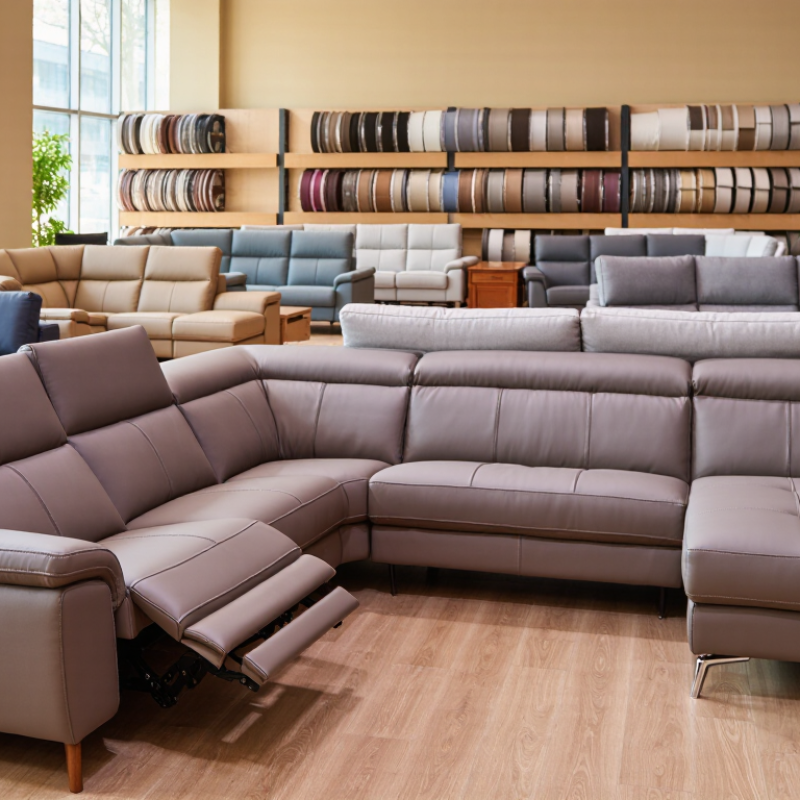
China Top 10 Sectional L Shape Sofa Suppliers?

China’s Top 10 L-Shape Sofa Suppliers Ranked by Capacity, MOQ, and Lead Time

China’s top ten sectional L-shape sofa suppliers should be judged by capacity, MOQ, and lead time. Capacity reflects more than factory size. It includes cutting lines, sewing teams, foam storage, and monthly quality control. The strongest suppliers can produce several thousand units monthly while maintaining consistent seat height and stitching. Some factories appear large but outsource key processes. That weakens reliability.

MOQ separates high-volume manufacturers from flexible project suppliers. Large producers often request 50 to 100 sets per color or fabric. Medium-sized factories may accept 10 to 30 sets, useful for retailers testing a new collection. Low MOQ can increase unit cost, though. Buyers should request a written quotation with packaging, fabric grades, carton dimensions, and spare-part terms included. Small details matter.

Lead time completes the ranking. Standard L-shape sofas commonly require 25 to 45 days after deposit and approved drawings. Custom reclining mechanisms, unusual fabrics, or revised prototypes may extend production beyond 60 days. Ask for a factory-loading schedule, not only a sales promise. A pre-shipment inspection should check frame joints, cushion recovery, reclining movement, and carton protection. In my experience, one overlooked corner seam can create costly returns. The ranking may still change after a factory visit, because capacity claims are difficult to verify from brochures alone.

Factory Comparison: MOQ from 20 Units and Production Lead Times of 30–45 Days

Comparing China’s top 10 sectional L shape sofa suppliers requires more than checking showroom photos. The factory’s MOQ, production control, and delivery records matter more. Many suppliers accept orders from 20 units, which suits boutique retailers and project buyers. However, a low MOQ may raise unit costs or reduce fabric choices. Ask for a written specification covering frame material, foam density, stitching, dimensions, and carton protection.

Production lead times commonly range from 30 to 45 days after sample approval and deposit confirmation. This period should include cutting, sewing, frame assembly, upholstery, inspection, and packing. It usually excludes sampling, payment delays, and ocean shipping. A reliable factory should provide a weekly production update. Photos of unfinished frames can reveal practical details. Check corner joints, hidden staples, seam alignment, and cushion recovery.

Details matter. A supplier may promise 30 days but lack capacity during peak seasons. Another may quote 45 days and maintain steadier quality. In sourcing work, I have found that verbal promises are weak evidence. Request recent inspection records and compare actual loading dates with earlier orders. Sample approval is also a risk point. A sofa can look correct yet feel too firm after mass production. That gap matters. Buyers should confirm color codes, tolerances, replacement terms, and inspection timing before production starts. This comparison is useful, but factory claims still need independent verification.

Product Standards: 55–65 cm Seat Depth and 30–35 kg/m³ Foam Density

When evaluating China’s top 10 sectional L shape sofa suppliers, seat depth and foam density deserve close attention. A 55–65 cm seat depth supports relaxed sitting without forcing users to lean backward. However, the measurement must be clear. Some suppliers quote the frame depth, not the usable cushion depth. Ask for a technical drawing before comparing prices.

Foam density should typically reach 30–35 kg/m³ for the main seat cushions. This range offers a practical balance between comfort, resilience, and production cost. Density is not the same as firmness. A softer cushion may still use high-density foam with a suitable foam formulation. Check the foam test report, production date, and compression recovery results. A sample cushion should regain its shape after repeated loading.

During supplier audits, measure the finished sofa with a tape measure, not only from catalog data. Sit on the corner seat, chaise, and straight section for several minutes. Notice pressure under the thighs. Check whether the back cushions reduce usable depth too much. Small errors happen. One prototype may meet 60 cm, while mass production drops to 56 cm after upholstery. That difference changes posture and customer satisfaction. Require approved samples, dimensional tolerances, and inspection records before shipment. Suppliers should also explain how foam density is verified across different batches.

China Top 10 Sectional L Shape Sofa Suppliers? - Product Standards: 55–65 cm Seat Depth and 30–35 kg/m³ Foam Density

Anonymized supplier comparison based on commonly specified export-ready L-shaped sectional sofa configurations. All listed products meet the target seat-depth and foam-density ranges.

Rank Supplier Code Seat Depth Foam Density Typical MOQ Frame Construction Upholstery Options Production Lead Time Export Packaging Customization Capability
1 Supplier A-01 60 cm 35 kg/m³ 20 sets Solid wood and engineered wood frame with reinforced corner blocks Polyester fabric, linen-look fabric, velvet, and selected faux leather 35–45 days Protective foam, PE film, five-layer carton, corner protection High: dimensions, fabric, leg finish, configuration, and packaging
2 Supplier B-02 58 cm 32 kg/m³ 30 sets Seasoned wood frame with sinuous spring support and webbing reinforcement Woven polyester, chenille, boucle, and water-repellent performance fabric 30–40 days Non-woven cover, foam wrapping, PE bag, and export carton High: modular layouts, cushion firmness, fabric, and stitching
3 Supplier C-03 62 cm 30 kg/m³ 15 sets Hardwood and plywood frame with metal connecting brackets Polyester, cotton-blend, velvet, microfiber, and synthetic leather 40–50 days Foam sheet, stretch film, reinforced carton, and moisture barrier Medium-high: sectional orientation, color, leg type, and logo-free packaging
4 Supplier D-04 55 cm 33 kg/m³ 25 sets Engineered wood frame with elastic webbing and steel support points Chenille, polyester, textured fabric, and abrasion-resistant upholstery 30–45 days EPE foam, PE film, corner guards, and double-wall carton Medium: color, upholstery, armrest profile, and seat firmness
5 Supplier E-05 65 cm 35 kg/m³ 10 sets Solid wood and plywood frame with high-resilience spring suspension Premium woven fabric, velvet, faux leather, and selected genuine leather options 45–60 days Multi-layer foam, protective fabric bag, PE film, and export carton High: custom dimensions, upholstery, cushion fill, and sectional modules
6 Supplier F-06 57 cm 31 kg/m³ 20 sets FSC-style engineered wood specification with reinforced load-bearing joints Polyester, linen-effect fabric, boucle, corduroy, and stain-resistant fabric 35–45 days Recyclable non-woven bag, foam protection, PE film, and carton Medium-high: fabric, colors, chaise side, and modular dimensions
7 Supplier G-07 61 cm 34 kg/m³ 30 sets Hardwood frame with sinuous springs, webbing, and removable seat platform Performance polyester, chenille, velvet, and polyurethane leather 35–50 days Foam corners, PE film, woven bag, and five-layer export carton Medium: standard modules, upholstery, stitching, and leg colors
8 Supplier H-08 59 cm 30 kg/m³ 15 sets Plywood and solid wood frame with elastic belt suspension Polyester, cotton blend, microfiber, velvet, and easy-clean fabric 30–40 days EPE foam, plastic film, corner board, and standard export carton Medium-high: seat depth, chaise orientation, fabric, and packaging
9 Supplier I-09 63 cm 33 kg/m³ 20 sets Mixed hardwood and engineered wood frame with reinforced metal fasteners Chenille, boucle, woven polyester, faux leather, and commercial-grade fabric 40–55 days Foam wrapping, PE film, moisture-resistant bag, and reinforced carton High: modular quantity, dimensions, upholstery, filling, and hardware
10 Supplier J-10 56 cm 32 kg/m³ 25 sets Engineered wood frame with solid wood rails and zigzag spring support Polyester, linen-look fabric, chenille, microfiber, and synthetic leather 30–45 days EPE foam, non-woven cover, PE film, and export-grade carton Medium: fabric, color, chaise side, leg finish, and carton labeling
Specification note: Seat depth refers to the usable sitting surface before back-cushion compression. Foam density is stated in kilograms per cubic metre. Final dimensions, material grades, test reports, packaging specifications, and lead times should be confirmed with the selected manufacturer before purchase.

Quality and Compliance: EN 12520, ISO 9001, BSCI, and Material Testing

For buyers comparing China’s top 10 sectional L-shape sofa suppliers, compliance should start with evidence, not polished showroom photos. EN 12520 tests domestic seating for strength, stability, and durability. It is not a general quality certificate. Ask for the exact test report, model number, laboratory, and test date. A sofa can look firm yet fail after repeated corner loading.

ISO 9001 matters because it controls production processes, corrective actions, and supplier records. The ISO Survey 2022 recorded more than 1.2 million ISO 9001 certificates worldwide, showing its broad industrial use. However, certification does not automatically prove excellent foam or fabric. Check batch records, density reports, formaldehyde results, and abrasion testing. Small details matter. BSCI assessment records can also reveal working-condition risks across the supply chain. Request the audit scope, facility address, finding status, and follow-up evidence. A logo alone proves little.

EN 12520, ISO 9001, BSCI, and material testing should connect to one purchase order. The European Commission’s Safety Gate 2023 report listed 3,412 product alerts across consumer categories, reminding buyers that market checks remain necessary. Inspect frame joints, zigzag springs, stitching, and carton protection before shipment. Third-party inspections reduce surprises, but they are not perfect. I have seen reports pass while color variation still disappointed customers. Suppliers should provide retained samples, random inspections, and clear replacement terms. That is practical reliability. Not marketing language.

China Top 10 Sectional L Shape Sofa Suppliers: Quality and Compliance Framework

This chart presents the core evidence categories for evaluating sectional L-shape sofa suppliers without publishing company or brand data. Each category represents one independently verifiable document or evidence package: EN 12520 test documentation for domestic seating safety and durability, ISO 9001:2015 quality-management certification, an amfori BSCI social-audit record, and material-testing reports covering chemical, mechanical, or flammability requirements. Supplier status should be confirmed through current certificates, test reports, issuing laboratories, scope, and validity dates.

Supplier Scorecard: Pricing, Customization, Warranty, and Export Capability

China Top 10 Sectional L Shape Sofa Suppliers?

A useful supplier scorecard should compare more than catalog prices. Request identical specifications, such as a 3.2-meter L shape, performance fabric, and kiln-dried wood. Then compare quoted prices, packaging costs, spare parts, and minimum order quantities. Low prices can hide thinner foam or weaker hardware.

Customization deserves practical testing. Ask whether suppliers can adjust seat depth, chaise direction, stitching, fabric rub count, and foam density. Reliable teams provide drawings, material samples, and a pre-production sample. Small details matter. One overlooked centimeter can affect room access and customer comfort.

Warranty terms reveal operational maturity. Check coverage periods, structural exclusions, response times, and replacement procedures. Export capability requires more than shipping experience. Review carton testing, container loading photos, export documents, and destination-port coordination. A supplier handling mixed orders should explain how labels and spare components are organized. In my evaluation experience, communication records often predict delivery performance better than polished showroom displays. This method is imperfect, because factory conditions and material costs change. Recheck important claims through recent orders, video inspections, and written documentation.

FAQS

How should Chinese L-shape sofa suppliers be evaluated?

Compare production capacity, MOQ, lead time, pricing, customization, warranty, and export capability. Factory size alone proves little. Claims need proof.

What does production capacity include?

Capacity includes cutting lines, sewing teams, foam storage, and monthly quality control. Strong factories may produce several thousand units monthly. Check seat height and stitching consistency.

What MOQ is common for L-shape sofas?

Large factories may request 50 to 100 sets per color or fabric. Medium factories may accept 10 to 30 sets. Lower MOQs often increase unit costs.

How long does sofa production usually take?

Standard production commonly requires 25 to 45 days after deposit and drawing approval. Custom mechanisms or unusual fabrics may exceed 60 days. Ask for a loading schedule.

Which details should a quotation include?

Request fabric grades, packaging costs, carton dimensions, spare-part terms, and minimum order quantities. Compare identical specifications, such as a 3.2-meter sofa with performance fabric.

How can buyers test customization ability?

Ask for drawings, material samples, and a pre-production sample. Test seat depth, chaise direction, stitching, fabric durability, and foam density. One centimeter can affect room access.

What should a pre-shipment inspection check?

Inspect frame joints, cushion recovery, reclining movement, stitching, and carton protection. Check corners carefully. One overlooked seam can cause expensive returns.

How can buyers assess warranty and export capability?

Review warranty periods, structural exclusions, response times, and replacement procedures. Also request carton tests, loading photos, export documents, and destination-port coordination. Polished showrooms can mislead.

Can supplier rankings change after deeper verification?

Yes. Factory conditions and material costs change. Verify capacity through recent orders, video inspections, written records, and factory visits. This method is imperfect.

Conclusion

This guide ranks China’s top 10 Sectional L-Shape Sofas suppliers by production capacity, minimum order quantity, lead time, product standards, and export readiness. It compares factories that can accept orders from approximately 20 units, with typical production schedules ranging from 30 to 45 days. Buyers will also find practical benchmarks for seat depth, generally 55–65 cm, and foam density, commonly between 30 and 35 kg/m³, helping them evaluate comfort, durability, and consistency across different suppliers.

The comparison further reviews quality and compliance indicators, including EN 12520 testing, ISO 9001 systems, BSCI assessments, and material safety testing. A supplier scorecard considers pricing, customization flexibility, warranty support, communication, production control, packaging, and international shipping experience. By combining these factors, the article provides a clear framework for identifying reliable manufacturing partners and selecting Sectional L-Shape Sofas that match project requirements, budget expectations, and delivery schedules.

Elara

Elara

Elara is a professional marketing specialist dedicated to helping customers better understand innovative products, practical solutions, and the value they can bring to everyday business and personal needs. With a strong understanding of the company’s product portfolio, customer expectations, and......