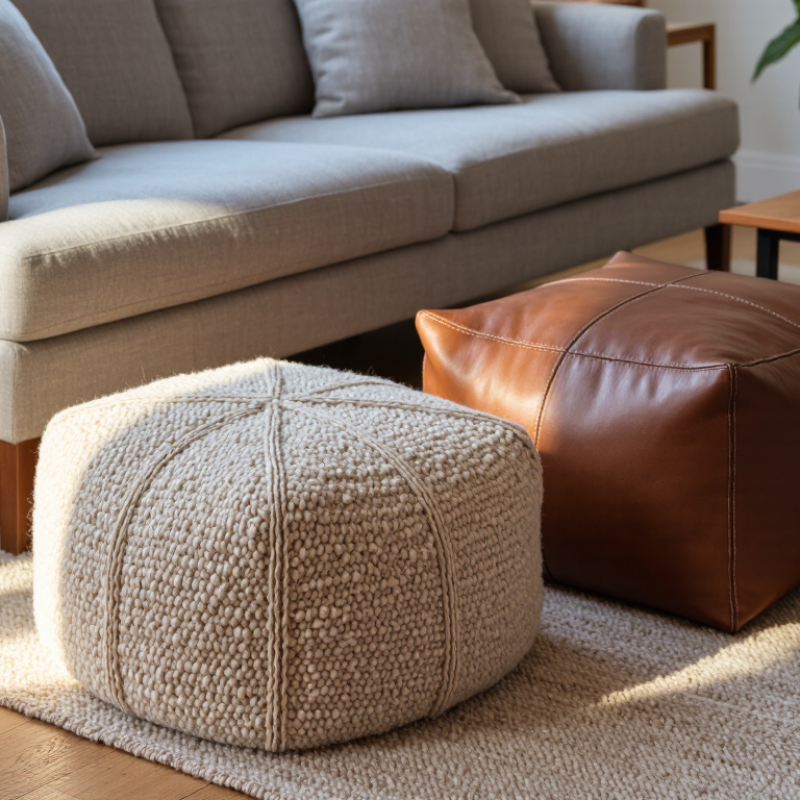
Handcrafted Ottoman Poufs are upholstered pieces made and finished by artisans, often in small batches. They can serve as footrests, flexible extra seating, or soft accents beside a sofa. Their shapes range from rounded cushions to low cubes and traditional Moroccan-inspired forms. Materials vary, with wool, cotton, leather, or woven textiles covering different types of filling. Construction matters. Check for even seams, secure closures, and filling that feels stable under gentle pressure. These details can reveal more than a polished product photograph.
A handmade label alone does not guarantee durability or comfort. Ask about the materials, dimensions, care instructions, and whether the cover can be cleaned or removed. Measure the intended space; a pouf that looks compact online may crowd a narrow room. Still, small variations in stitching, color, or shape can be part of the handmade character. Not every piece is flawless. That distinction deserves thought, especially when consistent sizing matters. A practical choice balances appearance with daily use: a firm pouf may work better as occasional seating, while a softer one can suit resting feet. Keep it away from damp areas unless the maker confirms the materials can handle them. Understanding these details makes it easier to choose Handcrafted Ottoman Poufs that fit your room, routine, and expectations.
Definition and Key Features of Handcrafted Ottoman Poufs
A handcrafted ottoman pouf is a soft, upholstered piece used as a footrest, occasional seat, or low accent table. Unlike many rigid ottomans, it usually has no visible legs and can be moved easily between rooms. The term “pouf” is used differently by some makers, so size and construction are worth checking. Some are firm enough for brief seating; others are mainly decorative.
Handmade features often include hand-stitched seams, woven or embroidered covers, and fillings such as foam, fiber, or recycled textile scraps. Wool, cotton, and leather are common cover materials, each with different care needs. Look closely at the seams and the way the cover closes. A tightly woven surface may handle daily use better than delicate raised embroidery. Small variations in shape or stitching can be part of hand production, not a defect. Not always, though.
A useful pouf should suit its intended job. For resting feet, a lower, softer shape may feel comfortable beside a sofa. For extra seating, check the maker’s guidance on weight capacity and whether the filling keeps its shape. A pouf that looks plush in a photograph may compress quickly in a busy household. That detail is easy to overlook. Also consider whether the cover can be cleaned, especially in homes with pets or frequent visitors.
What Are Handcrafted Ottoman Poufs?
A handcrafted ottoman pouf is a soft, upholstered seat or footrest made by hand. The chart shows approximate dimensions often found in common round and square pouf styles; actual sizes vary by maker and design.
Key features include hand-stitched construction, flexible fabric or leather covers, and soft filling. Poufs can serve as footrests, extra seating, or low tables when used with a tray.
Materials and Traditional Crafting Techniques
Handcrafted Ottoman poufs are compact, cushioned seats made with stitched covers and soft filling. Their materials vary by region and workshop. Moroccan-style examples may use tanned leather, while others have woven wool or cotton covers. Leather panels are cut to shape, then joined with close hand stitching. Artisans may add embroidered geometry or raised seams, often using waxed thread for strength.
The filling matters, too. Wool, cotton, or reused textile scraps can create a firm, yielding seat. A tightly packed pouf holds its shape better, though it may feel less soft. Buyers can check the seams, leather thickness, and evenness of the filling. Small variations are normal in handwork. They are not a substitute for secure stitching.
Traditional skills sit within a substantial craft economy. Grand View Research estimated the global handicrafts market at USD 906.8 billion in 2023, in its Handicrafts Market report. That broad figure does not measure poufs specifically, but it shows the scale of demand for handmade goods. Craft quality still varies. A slightly uneven stitch may reveal handwork, yet weak seams can shorten a pouf’s useful life.
Common Shapes, Patterns, and Design Influences
Handcrafted Ottoman poufs commonly come in round, cube-shaped, or low cylindrical forms. A round pouf softens the hard lines of a room, while a cube can sit neatly beside a sofa. Cylinders make relaxed footrests, but their curved sides may not support a tray steadily. Fillings such as wool, cotton, or fabric scraps affect firmness and weight. Small differences matter. Check seams and closures if the pouf will see daily use.
Patterns often feature diamonds, stripes, stepped lines, or medallion-like motifs. Some designs draw on textile traditions from North Africa and the Middle East, but styles vary widely by maker and place. Colors may be muted or vivid, depending on the yarn and dye choices. Handwork can leave slight differences in stitch spacing or motif alignment. These irregularities may be part of the character, not proof of quality; inspect the construction rather than judging by appearance alone. Still, comfort is personal.
Tips: Sit on the pouf before choosing it, if possible. Look closely. For a footrest, favor a stable base and filling that does not collapse under light pressure.
Uses of Ottoman Poufs in Interior Spaces
What Are Handcrafted Ottoman Poufs?
Uses of Ottoman Poufs in Interior Spaces
A handcrafted ottoman pouf can add a seat, footrest, or soft landing spot beside a bed. In a living room, place one near a low chair for relaxed seating. A firm, flat pouf can also hold a tray, though it may wobble on thick carpet. In a small apartment, it can tuck beneath a console when not in use. Measure the clearance first. A pouf that blocks a walkway quickly becomes clutter.
Construction affects how well it serves each space. Check the stitching, cover fabric, filling, and care instructions before choosing one. Dense filling usually offers steadier support; softer filling feels casual but may need reshaping. There is a trade-off. The U.S. Environmental Protection Agency’s 2018 materials report estimates that 12.1 million tons of furniture and furnishings were generated in the United States. That figure does not measure poufs specifically, but it is a useful reminder to consider durability and repairability. A removable, washable cover can help extend a pouf’s useful life. Still, handcrafted pieces can vary in shape and firmness, so ask about dimensions and materials rather than relying on appearance alone.
What Are Handcrafted Ottoman Poufs? — Uses in Interior Spaces
A pouf is a compact, upholstered furnishing that can serve as a footrest, extra seat, or soft accent. Handcrafted versions may feature hand-sewn covers, woven textiles, embroidery, or other artisan-made details.
Size ranges are approximate examples, not fixed standards. Actual dimensions, firmness, care requirements, and intended use depend on the pouf’s construction and materials.
Care, Durability, and Selection Considerations
What Are Handcrafted Ottoman Poufs?
Care, Durability, and Selection Considerations
A handcrafted ottoman pouf can serve as a footrest, extra seat, or low table. Its lifespan depends on more than its outer fabric. Check the seams, closure, and filling. Even stitching and reinforced stress points usually handle regular use better than loose seams. Press the center and edges; a pouf that quickly collapses may need frequent refilling. Some handmade variation is normal, but uneven filling can affect comfort.
Care depends on the materials. Vacuum woven covers gently with an upholstery attachment, and blot spills with a clean cloth. Avoid rubbing; it can push stains deeper or roughen fibers. Check the maker’s care instructions before using water or cleaners, since dyes and natural fibers react differently. Let it breathe. Keep the pouf away from direct sunlight and damp floors to limit fading and moisture damage. Rotate it occasionally so one spot does not take all the pressure.
Before choosing, measure the space and compare the pouf’s height with nearby seating. A soft, low pouf may work well for feet but feel unstable as a seat. Consider removable covers if cleaning matters, while checking that the filling stays contained. One detail is easy to overlook: a light pouf can slide on smooth flooring. A rug may help, though it will not solve every fit issue. The best choice is not always the prettiest one.
Conclusion
Handcrafted Ottoman Poufs are versatile, cushioned furnishings made through skilled, often time-intensive techniques. Their defining features include soft upholstery, supportive filling, and distinctive details that reflect the maker’s craft. Materials may include woven textiles, leather, wool, cotton, or other natural and synthetic fibers, while traditional methods such as hand weaving, embroidery, and careful stitching give each pouf its own character.
Available in round, square, and other shapes, these poufs may feature geometric motifs, regional patterns, or contemporary designs. They can serve as footrests, extra seating, or casual surfaces in living rooms, bedrooms, and reading areas. To choose one, consider its size, filling, fabric, construction, and how it will fit the space. Regular gentle care, appropriate to the material, can help preserve its appearance and durability over time.