In global B2B procurement—spanning luxury hospitality, high-traffic food & beverage facilities, executive office environments, and multi-family residential developments—specifying solid oak tables requires far more than aesthetic evaluation. Sourcing teams and interior architects face rigorous regulatory demands surrounding structural safety, VOC emissions, and environmental timber traceabilities.
As premier CE certified oak tables manufacturers operating from integrated kiln-drying and CNC wood-machining facilities, our engineering framework strictly complies with European Norms EN 15372:2016 (Test severity level 2 & 3 for general contract non-domestic tables) and EN 12521:2015 (strength, durability, and safety for domestic furniture).
This technical whitepaper provides commercial procurement managers with actionable insight into raw timber selection, kiln schedule science, moisture equilibrium control, mechanical joint stress-testing, and factory-direct customization capabilities.
| Compliance Standard | Testing Scope & Directive | Commercial Impact |
|---|---|---|
| CE Compliance (EU) | General Product Safety Directive 2001/95/EC | Guarantees non-hazardous materials and structural stability. |
| EN 15372:2016 | Fatigue, Vertical Static Load & Shear Testing | Verifies contract-grade seating stability under 200kg+ loads. |
| REACH & E0 Formaldehyde | Chemical Safety & Indoor Air Quality (SVHC) | Eliminates off-gassing in air-tight hospitality environments. |
| FSC / PEFC Chain of Custody | Sustainable Hardwood Forest Management | Ensures 100% legal timber traceability for ESG reporting. |
Explore our factory-direct product range engineered for commercial durability, flexible dimensional adjustments, and certified compliance across North America, Europe, and Asia-Pacific.
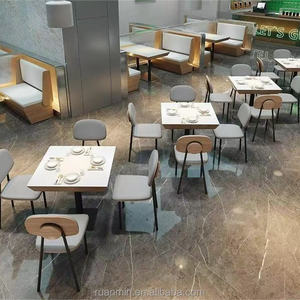
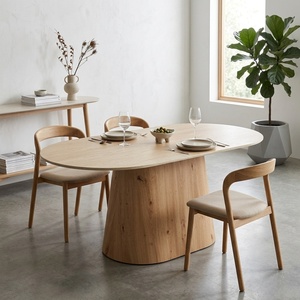
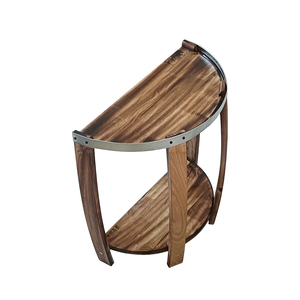
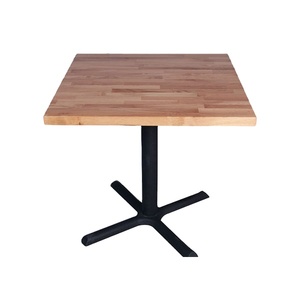
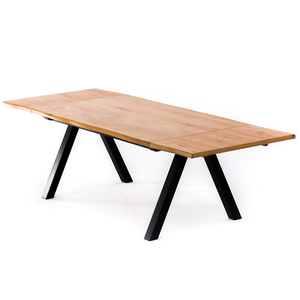
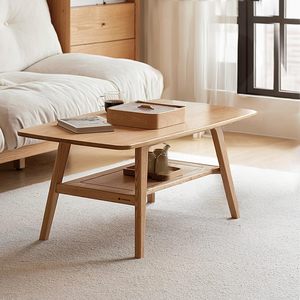
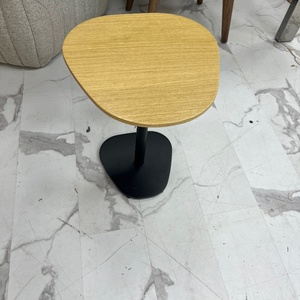
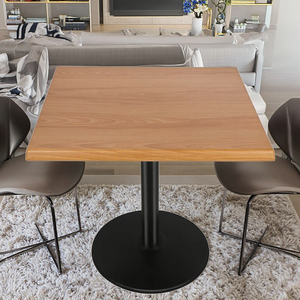
Why structural failures happen in commercial timber furniture, and how our automated kiln-drying, mortise-and-tenon joinery, and polyurethane sealing eliminate warp, checking, and split joint defects.
Unconditioned timber retains 18-25% moisture, leading to severe warping when moved to HVAC-controlled commercial buildings. We utilize 45-day computer-controlled vacuum dehumidification kilns to bring oak boards to an exact 6% - 8% Equilibrium Moisture Content (EMC), ensuring absolute dimensional stability across all climate zones.
Commercial oak tables suffer structural fatigue at leg-to-apron stress points under lateral forces. Rather than relying solely on metallic brackets or surface screws, our table structures integrate double-doweled mortise and tenon joinery reinforced with high-tensile structural aliphatic resin adhesives.
Restaurateurs and hoteliers require zero water-ring marking, heat resistance up to 100°C, and scratch-resistant surfaces. We apply multi-stage electrostatic acrylic-polyurethane sealers and bio-based plant oils tested against coffee, wine, and harsh chemical sanitizers under ISO 4211 testing guidelines.
Every structural model undergoes finite element analysis (FEA) and physical stress testing. Table surfaces undergo drop tests with 50kg weights, horizontal fatigue pushing (10,000 cycles at 300N force), and edge load tipping resistance to comply with stringent European public installation standards.
Environmental governance is critical for modern B2B tenders. Our raw oak timber (Quercus robur & Quercus alba) is exclusively sourced from sustainably managed European and North American forests, backed by FSC and PEFC certification documentation for full ESG compliance.
Whether you require integrated wire-management power pop-ups for executive conference tables, metal inlaid brass accents, customized edge profiles (Swiss edge, live edge, bullnose), or custom stain matching (Smoked Oak, Blackened Oak, Nordic White), our engineering studio delivers ready-to-install units.
Understanding why retail-grade solid oak furniture fails in commercial settings—and why procurement teams specify CE certified manufacturing partner protocols.
| Technical Criterion | Commercial Contract Grade (Our CE Certified Standard) | Mass-Market Residential Furniture |
|---|---|---|
| Lumber Selection & Grade | FAS Grade (First & Seconds) European/American White Oak | Common Grade #2 with knots, sapwood, and inconsistent grain |
| Kiln-Drying Moisture Content | Strictly controlled 6% – 8% EMC via computer schedule | Inconsistent air-dried or 12% - 15% moisture content |
| Top Construction & Relief Slots | Underside steel relief channels / expansion C-channels slotted | Flat glued boards without thermal expansion structural relief |
| Mechanical Joint Strength | Heavy-duty doweled mortise/tenon + structural metal inserts | Direct wood-screw fastening prone to strip out over time |
| Surface Abrasion Resistance | EN 12720 Class 1B / AC4 Commercial Abrasion Polyurethane | Basic nitrocellulose lacquer (NC) prone to white heat rings & alcohol stains |
| Compliance Certification | Full CE, EN 15372 Level 3, REACH E0 VOC Emissions | No formal commercial structural or chemical off-gassing certification |
As commercial spaces evolve into multi-functional hybrid environments, buyer expectations for commercial dining tables, office conference surfaces, and boutique hospitality furnishings have dramatically shifted. Key procurement vectors include:
Technical clarity on minimum order quantities, lead times, CE certification compliance, and global logistics for contract oak table projects.
For solid oak tables intended for commercial, hospitality, or public installations in the European Union, compliance revolves around EN 15372:2016 (Furniture - Strength, durability, and safety - Requirements for non-domestic tables). Depending on the project tier, tables are tested for Level 1 (light office), Level 2 (general contract, hotels, restaurants), or Level 3 (severe public use such as educational institutions and transport hubs). Additionally, finishes must meet REACH regulations regarding Substances of Very High Concern (SVHC) and chemical VOC limits.
Oak is a hygroscopic hardwood that naturally expands and contracts with changes in ambient humidity. To prevent warping or joint splitting, we implement three critical engineering safeguards: 1) Kiln-drying raw lumber down to 6%–8% EMC in computerized vacuum kilns; 2) Machining routed metal C-channels into the underside of large table tops with slotted bolt holes to allow lateral movement while maintaining flat alignment; 3) Applying equal coat thickness of polyurethane sealer to both top and bottom faces to balance moisture transfer rates.
Yes. As an original equipment manufacturer (OEM) and original design manufacturer (ODM), every order enters our factory floor via CAD/CAM shop drawings. We accommodate custom tabletop spans up to 4.2 meters in single or matched multi-section tops, custom stain matching (e.g., natural matte, smoked oak, espresso, whitewashed), integrated pop-up power modules, wire pathways, and custom cast-iron or stainless steel base integrations.
Standard production lead times for custom B2B orders range from 30 to 45 days upon shop drawing sign-off and sample approval. For export, all solid oak table tops are wrapped in scratch-resistant foam protective film, corner-guarded with high-density EPE foam, encased in 7-ply heavy corrugated cartons, and secured inside heat-treated, ISPM-15 compliant fumigated solid plywood crates to guarantee zero transit damage during transoceanic shipping.
Absolute precision is vital for commercial interior specifiers. We provide pre-production timber swatches, finish physical samples (polyurethane vs. hardwax oil), and full-scale prototype table units for physical load inspection, stain verification, and approval prior to releasing full production runs.
Our standard B2B procurement MOQ starts at 10 units for large dining/conference tables, and 30 units for standard cafe or side tables. However, for complete commercial fit-outs (such as boutique hotel projects or restaurant chains), we support mixed-container orders combining solid oak tables, leather booth seating, and accent chairs under a unified project schedule.