Featured CE-certified interior & exterior wall cladding systems for commercial, industrial, and residential architectural specifications.
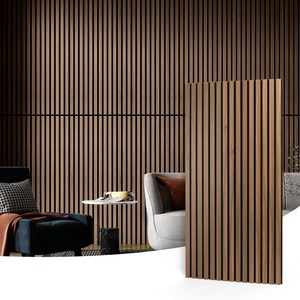
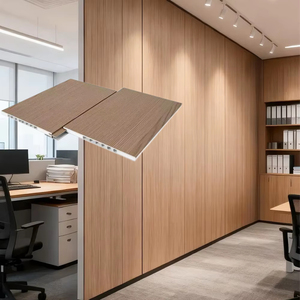
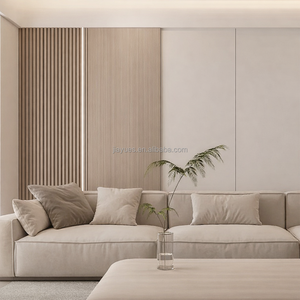
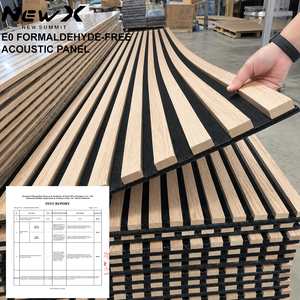
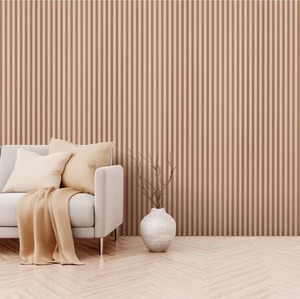
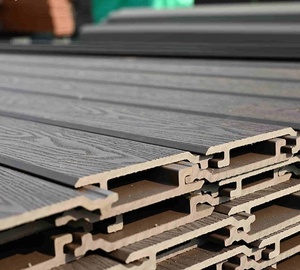
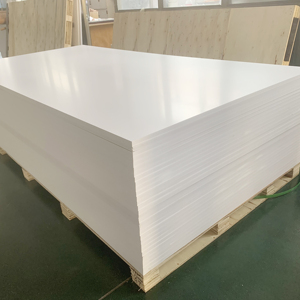
Analyzing precision extrusion, material science, and rigorous CE compliance protocols for commercial building supply chains.
Operated via automated multi-cavity twin-screw extrusion lines and high-precision CNC routing benches. Every order enters production from direct technical CAD schematics, allowing customizable profile widths, tongue-and-groove tolerance adjustments (±0.05mm), core density calibration, and bespoke acoustic slot spacing without costly re-tooling delays.
Full compliance with European Construction Products Regulation (CPR 305/2011) and EN 15102 standards for decorative wall coverings. Material batches undergo standardized testing for flame spread rate, smoke toxicological density, heavy metal leaching, and VOC degassing to guarantee absolute compliance with international structural fire codes.
Engineered for multi-modal international freight transit. Heavy-duty reinforced honeycomb edge protectors, vacuum-sealed PE moisture wrapping, and fumigated solid timber ISPM-15 export pallets safeguard panel edges from impact damage, surface micro-abrasion, and ambient humidity fluctuations during ocean voyages.
Unlike legacy gypsum or untreated timber cladding, modern engineered wall panels combine co-extruded polymers, inorganic carbon crystal mineral flours, and recycled polyethylene terephthalate (PET) acoustic felt. Co-extrusion technology seals a dense PVC or WPC core inside a protective acrylic surface layer, imparting absolute resistance to UV degradation, biological decay, and surface scratching while keeping linear thermal expansion under 0.04% (ISO 22088).
Comparative technical benchmarks for architectural specifiers, structural engineers, and commercial procurement managers.
| Panel Material Class | Primary Composition | EN 13501-1 Fire Rating | Acoustic NRC Value | Moisture Absorption | Primary B2B Application |
|---|---|---|---|---|---|
| Akupanel Acoustic Wood Slat | Natural Oak Veneer + Recycled PET Felt | Class B-s1, d0 | 0.85 - 0.95 (ISO 354) | < 1.2% (Interior) | Recording Studios, Auditoriums, Luxury Hotels |
| Carbon Crystal PVC Plate | Carbon Crystal Powder + Rigid PVC Resin | Class B1 / NFPA Class A | 0.30 - 0.45 | 0.00% (Non-porous) | High-traffic Corridors, Healthcare, Elevators |
| Co-Extruded WPC Exterior | 60% Wood Fiber + 30% HDPE + 10% Additives | Class C-s2, d0 / ASTM E84 | 0.25 - 0.40 | < 0.5% (24hr Submersion) | Outdoor Building Facades, Commercial Cladding |
| High-Density PVC Foam Board | Celuka Polyvinyl Chloride Foam | Self-Extinguishing (UL94 V-0) | 0.35 - 0.50 | < 0.1% | Modular Wall Partitions, CNC Screen Printing |
| HPL Commercial Plate Board | Thermosetting Resin + Cellulose Fibers | Class A / B-s1, d0 | 0.20 - 0.35 | < 0.8% | Office Workspace Partitions, Cleanrooms |
Market transformation driven by stringent global decarbonization mandates, modular prefabricated construction, and circular materials.
Global building codes increasingly mandate carbon footprint reductions across building envelopes (Embodied Carbon Metrics). Procurement is rapidly shifting toward wall panels manufactured using post-consumer recycled PET bottles for acoustic underlays and bio-resins combined with agricultural wood-waste flour. Factories utilizing renewable solar energy in their extrusion lines offer verifiable Environmental Product Declarations (EPD) that assist projects in earning LEED v4.1 and BREEAM certifications.
Skyrocketing jobsite labor costs across Western Europe, North America, and Australia have prioritized dry-construction, snap-lock wall panel systems. Future procurement trends emphasize tongue-and-groove click profiles integrated with pre-applied adhesive channels or hidden metal clip grooves. These systems reduce site installation times by up to 65% compared to traditional wet plastering or ceramic tiling, enabling faster project turnover for hotel refurbishments and commercial office fit-outs.
Architectural demand requires authentic natural stone, brushed metal, and tactile timber grain finishes without the structural weight or maintenance overhead of natural marble and solid timber. Advanced multi-pass UV-cured nano-coatings provide stain-resistant, anti-fingerprint, and anti-microbial surface properties essential for medical facilities, hospitality dining areas, and public transit terminals.
Innovations in intumescent chemical formulations mean modern PVC, WPC, and acoustic felt backings automatically carbonize upon flame contact, suppressing smoke emission (s1 classification) and stopping flaming droplets (d0 classification). Concurrently, micro-perforated acoustic cores engineered via precise algorithm-driven laser drilling optimize reverberation time (RT60) across human speech frequencies (250Hz - 4000Hz).
Essential verification steps for global buyers, importers, and EPC contractors to guarantee factory reliability and product authentic certification.
Do not accept unverified third-party PDF certificates. Insist on authentic test reports issued by EU Notified Bodies listed on the NANDO (Single Market Compliance) database. Verify that the System of Assessment and Verification of Constancy of Performance (AVCP System 1 or System 3) corresponds to structural fire resistance EN 13501-1 and hazardous substance emissions EN 717-1.
Request factory pre-shipment Quality Inspection (QC) logs measuring panel caliper uniformity, core density (g/cm³), and surface lamination peel strength (ISO 2409 adhesion cross-cut test). Low-grade PVC wall panels often utilize excess filler (calcium carbonate), resulting in brittle boards prone to cracking during transit or installation.
Long panel shipments (e.g., 2.8m to 3.0m lengths designed for floor-to-ceiling application) require flat container stowing with moisture-absorbing desiccant packs. Ensure your exporter packs panels in fully enclosed wooden crates with vertical support beams to avoid permanent bow deformation under heat in tropical shipping corridors.
Authoritative answers addressing technical certifications, custom production, order minimums, and shipping logistics.
CE Certification for wall panels is governed by harmonized European standard EN 15102 (Decorative Wall Coverings). Mandatory testing includes EN 13501-1 for Reaction to Fire (evaluating ignitability, heat release, flame spread, smoke production s1-s3, and flaming droplets d0-d2), EN ISO 16000 for VOC and formaldehyde emissions (E1/E0 classification), and EN 12149 for heavy metal leaching (Barium, Lead, Cadmium, Chromium).
Standard production runs for stocked wood grain or marble PVC carbon crystal plates begin at 100 panels per color. For custom extruded WPC profiles, specialized real-wood veneer stains, or custom acoustic slat spacings, the typical factory MOQ is 300 to 500 square meters. Full Container Load (FCL 20ft/40ft) orders unlock custom tooling, private labeling, and OEM brand box packaging.
Acoustic slat Akupanels function through a dual dissipation mechanism: structural wood slats break up specular sound waves (diffusing flutter echoes), while the porous high-density recycled polyester PET backing absorbs sound wave energy via viscous friction within the fiber matrix. When installed over a 45mm timber batt frame with mineral wool backing, system Noise Reduction Coefficients (NRC) reach up to 0.95 (Class A Sound Absorption).
Yes. Carbon crystal panels utilize a non-porous, co-extruded high-density PVC and mineral powder formulation that absorbs 0.00% water (tested under 24-hour immersion per ISO 62). They are completely impervious to swelling, mold growth (ASTM G21 zero rating), and delamination, making them ideal for high-humidity environments such as commercial bathrooms, spa corridors, basement walls, and tropical coastal resorts.
Yes. Heavy-duty carbon crystal plates and interlocking PVC foam boards can be bonded directly over smooth existing ceramic tiles, concrete walls, or drywall using high-tack structural polyurethane sealant or neutral silicone. For uneven walls with planarity variations exceeding 5mm, timber or light-gauge steel furring channels (battens) are installed first to establish a flat mounting plane.
Standard manufacturing lead time is 10 to 15 business days following sample approval and deposit confirmation. Ocean freight transit times range from 12 to 18 days to Pacific Rim ports, 22 to 30 days to European main ports (Hamburg, Rotterdam, Felixstowe), and 25 to 35 days to North American ports (Los Angeles, New York). Air freight express sampling is available via DHL/FedEx within 5 to 7 days.
Our exterior WPC wall panels feature a 360-degree co-extruded shield casing composed of an engineered fluoropolymer polymer blend with UV stabilizers and antioxidant additives. Accelerated weathering tests (ISO 4892-2) show no visible surface cracking, chalking, or major color fading (Delta E < 3.0) even after 3,000 hours of continuous xenon-arc UV exposure.
We provide a standard 10-Year Commercial Warranty for interior carbon crystal, PVC, and acoustic wall panels, and a 15-Year Limited Structural Warranty for exterior co-extruded WPC cladding. Warranties cover material defects, structural delamination, premature UV degradation, and fire-retardant performance under normal operational conditions.
Partner directly with a CE-certified manufacturer. Receive complete technical data sheets (TDS), safety data sheets (SDS), fire test reports, and physical sample boxes delivered directly to your architectural office or project site.