Explore our benchmark production line engineered for commercial hospitality, high-end residential fit-outs, and global retail distribution.
The global contract and residential furniture landscape has undergone a structural paradigm shift. Storage benches—once regarded as secondary utilitarian items—have transitioned into core architectural elements for space optimization across residential apartments, boutique hotels, commercial cafes, and high-density office fit-outs. As global real estate square footage costs escalate, multi-functional furniture solutions featuring concealed storage compartments, integrated power ports, and luxury upholstery have witnessed exponential demand growth.
China remains the epicenter of high-precision furniture manufacturing, accounting for over 45% of global storage bench exports. Modern Chinese OEM/ODM factories in industrial hubs such as Guangdong, Zhejiang, and Anhui have evolved from low-cost mass assembly lines into sophisticated engineering hubs equipped with automated CNC woodworking machines, robotic upholstery stitching, and zero-VOC eco-finishing facilities. Procurement directors, interior specifiers, and brand owners seeking to source from China’s top storage bench factories must look beyond unit price. Sustainable competitive advantage lies in evaluating factories based on structural integrity, material safety certifications, ergonomic foam densities, and bespoke OEM agility.
A storage bench experiences dual mechanical stresses: vertical static weight load when used for seating, and repeated dynamic kinetic stress on its hinges, lid stays, and internal storage base during opening and closing cycles. Premium Chinese manufacturers build for structural durability by enforcing strict engineering benchmarks across four core material pillars:
Inferior benches utilize unconditioned softwoods or low-density particleboards that warp in humid tropical environments, leading to lid misalignment and hinge pull-outs. Premier factories utilize kiln-dried solid beech, birch, or solid eucalyptus timber with moisture levels tightly regulated between 8% and 10%. Critical joinery points are reinforced using corner blocking, doweled joints, and pneumatic steel stapling rather than simple surface screws, guaranteeing structural integrity up to a 300kg static payload.
Seating comfort and shape retention depend directly on polyurethane foam density and tensile strength. Leading export manufacturers deploy multi-layered foam structures: a dense 45 kg/m³ base foam block to absorb load without bottoming out, topped with a 30 kg/m³ high-resilience memory foam layer for immediate tactile comfort. Benches engineered for hospitality and commercial use adhere to international fire safety protocols including CAL 117 and BS 5852.
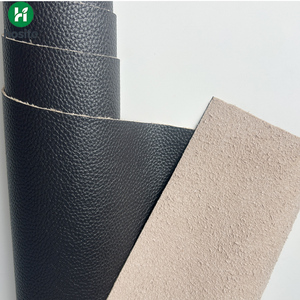
From full-grain top-layer cowhide to eco-friendly PU faux leather featuring Litchi grain embossing, material selection dictates the product's operational lifespan. B2B buyers must specify technical rub-test thresholds:
| Material Category | Technical Grade / Specification | Martindale Abrasion Rating | Recommended B2B Application |
|---|---|---|---|
| Full-Grain Leather | 1.2 - 1.4mm Italian import / Top cowhide | > 50,000 Cycles | Luxury Residential, Executive Suites, Boutique Hotels |
| Eco-Friendly PU Leather | Water-based micro-fiber / Litchi Texture | > 35,000 Cycles | Commercial Cafes, High-Traffic Retail, Rental Apartments |
| Performance Velvet / Linen | Hydrophobic stain-resistant coating | > 40,000 Cycles | Bedroom End-of-Bed Benches, Residential Living Rooms |
| Commercial Vinyl | Antimicrobial, UV-stabilized heavy duty | > 100,000 Cycles | Healthcare Waiting Areas, Restaurant Booth Seating |
Safety is a critical compliance checkpoint, particularly for products destined for North American and European residential markets where finger-pinch hazards are strictly audited under ASTM safety rules. China’s premier storage bench suppliers equip lid structures with dual hydraulic gas-strut lift systems engineered for over 100,000 smooth opening/closing cycles. These struts feature soft-close dampening that prevents accidental lid dropping, allowing the lid to hover securely at any open angle between 45 and 90 degrees.
To capture market share in an evolving commercial landscape, sourcing managers must align with global macro trends reshaping storage bench design and production. Our analysis highlights four key shifts defining the industry over the next decade:
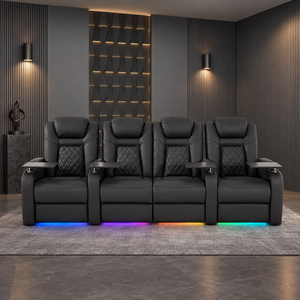
Storage benches are increasingly integrated with low-voltage electronic modules, including dual USB Type-C fast-charging ports, embedded ambient LED light strips, and wireless phone charging pads built into armrests or side valances.
Fixed single-purpose benches are giving way to modular storage units. Modular benches feature removable side arms, interchangeable base storage dividers, and click-lock connecting hardware that allows easy transformation into L-shaped lounge booths.
European and American buyers are enforcing strict ESG compliance. Leading Chinese suppliers are adopting bio-based polyols for foam manufacturing, recycled polyester fabrics derived from ocean plastics, and FSC-certified timber frames.
To reduce global ocean freight shipping costs, advanced factories design Knock-Down (KD) storage bench structures. Precision metal-on-metal connector brackets allow end consumers to assemble structural benches in under 5 minutes without compromising load-bearing stability.
A primary failure point in B2B furniture procurement stems from communication breakdown during technical translation from design concept to bench production. Trusted Chinese OEMs operate under a standardized 4-step quality assurance workflow:
Upon receiving client floor plans or dimensional sketches, factory engineers generate 3D CAD models and structural stress-distribution diagrams. Access clearance, internal storage volume, and fabric yield are calculated prior to cutting timber.
Hardwood logs are seasoned in computerized kiln chambers until internal moisture drops below 10%. Computer-controlled 5-axis CNC routers slice frame members to 0.5mm tolerances, ensuring flawless joint fitting during assembly.
High-tension elastic webbing and S-spring grids are fixed to the frame base. Cold-cure foam modules are contoured and bonded using non-toxic water-based adhesives. Master upholsterers hand-fit and double-stitch leather or fabric covers over foam cores.
Finished units undergo static load tests (300kg applied for 24 hours), hydraulic lid cycle tests, and fabric seam strength audits. Benches are then wrapped in moisture-barrier foil, corner-protected with high-density EPE foam, and packed into 5-ply export corrugated cartons.
When executing enterprise-level procurement contracts, working directly with established, vertically integrated manufacturers offers distinct advantages over intermediary trading companies:
Clear answers to critical technical, logistical, and commercial inquiries for global sourcing professionals.
Looking for tailored OEM/ODM manufacturing, commercial contract quoting, or custom sample development? Contact our engineering team today for technical advice and instant factory quotes.
Send an Inquiry