Industry Whitepaper & Strategic Insights
South Korea Commercial Bar Stool Market: Technical Requirements & Landscape Analysis
The South Korean commercial furniture ecosystem represents one of Asia's most dynamic and demanding specification environments. Driven by modern interior architectural transformations across major metropolitan hubs—such as Seoul (Gangnam, Seongsu, Hongdae, Yeouido), Busan (Haeundae), and Incheon (Songdo International Business District)—the procurement criteria for bar stools and high counter seating have shifted dramatically from purely aesthetic sourcing to high-performance, precision-engineered furniture manufacturing.
"In the South Korean commercial market, a bar stool is no longer just a seating element. It is a critical ergonomic interface operating within tightly optimized micro-spaces, requiring strict structural integrity to pass local safety assessments while aligning with high-concept architectural themes."
Key Market Drivers Shaping Korean Procurement in 2026:
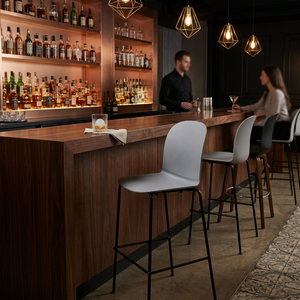
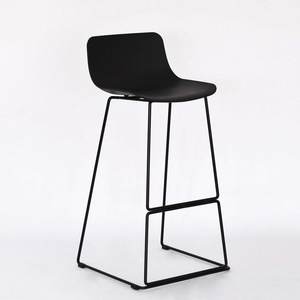
1. Space-Optimized Urban Dimensions: South Korean commercial real estate values dictate high revenue per square meter. F&B establishments (such as specialty dessert cafes, craft cocktail bars, and modern izakayas) prioritize compact footprints. Bar stools must feature slim, high-tensile steel frames, stackable capabilities, or narrow pedestal bases that do not restrict foot traffic or obstruct narrow gangways.
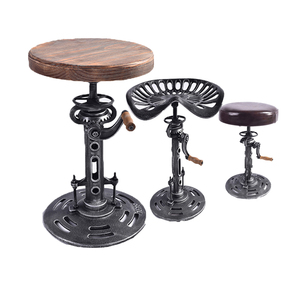
2. Counter Height Standardization (850mm vs 1050mm): Unlike Western markets where standard bar heights predominantly range from 1050mm to 1100mm, the Korean commercial and residential sectors utilize two distinct height classes: Residential Kitchen Islands (850mm - 900mm counter height, calling for 600mm-650mm seat heights) and Commercial High Counters (1000mm - 1050mm height, calling for 700mm-750mm seat heights). Precision height-adjustable hydraulic systems or custom-cut fixed-leg dimensions are imperative for B2B importers.
3. Material Durability against High Foot-Traffic: High turnover rates in Korean commercial districts require commercial seating to undergo stringent Martindale abrasion tests (> 50,000 double rubs for upholstery) and structural static weight load tests exceeding 150 kg (330 lbs). Finishes must feature PVD (Physical Vapor Deposition) electroplating or electrostatic powder coatings to prevent chipping and corrosion caused by floor cleaning chemicals and seasonal humidity fluctuations.
Procurement Guidance
Frequently Asked Questions (FAQ) for Korea B2B Buyers
How do your bar stools comply with South Korea’s KC Safety Certification?
Our manufacturing facility produces commercial seating strictly adhering to international structural safety benchmarks (BIFMA X5.1 / EN 12520). For South Korean importers, we provide complete raw material test reports (including formaldehyde emission tests under E0/E1 standards, heavy-metal-free coating verification, and SGS Class 4 gas-lift certificates) to ensure smooth clearance through Korea Certification (KC) verification procedures.
What is the recommended seat height for standard South Korean kitchen islands versus commercial bars?
In South Korea, residential kitchen islands typically stand at 850mm to 900mm high, requiring a fixed seat height of 600mm to 650mm. Commercial bar counters in pubs and restaurants are constructed at 1000mm to 1050mm, requiring a seat height of 700mm to 750mm. Our height-adjustable swivel models bridge both application requirements effortlessly.
What are the shipping options and lead times to Incheon Port or Busan Port?
We regularly handle FCL (Full Container Load) and LCL (Less than Container Load) shipments directly to Busan Port and Incheon Port. Standard production lead time is 15 to 25 days depending on OEM customization requirements, with transit times from our export port to South Korea taking approximately 4 to 7 ocean transit days.
Can we order custom fabric swatches, frame finishes, or branded OEM packaging?
Yes. We offer comprehensive OEM/ODM services for Korean furniture brands, wholesalers, and contract procurement agencies. You can select custom upholstery colors (PU leather, velvet, tech fabric), metal frame finishes (matte black, brushed brass, chrome, powder-coated pastel colors), and specify customized master carton markings with your brand barcode and logo.
What is the Minimum Order Quantity (MOQ) for commercial projects in Korea?
For standard catalog models, our MOQ starts at 50 units per design/color. For fully customized OEM orders (custom dimensions or bespoke fabric specifications), the MOQ is typically 100 to 200 units, allowing cost-effective container consolidation for regional distributors.
Partner with a Leading Bar Stool Factory for Korea
Upgrade your product lineup or source commercial furniture engineered for the South Korean market. Contact our engineering and export team today for factory-direct price sheets, CAD drawings, and sample orders.
Send an Inquiry