Precision-engineered guestroom suites, luxury seating, and modular public space furniture tailored for European standards and French hotel aesthetics.
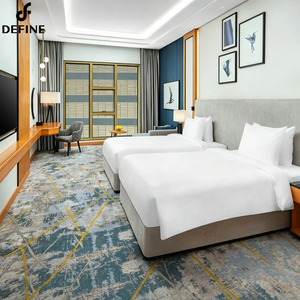
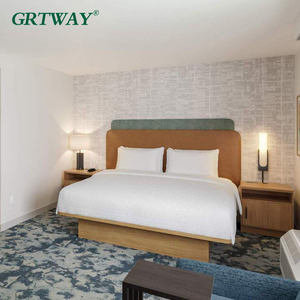
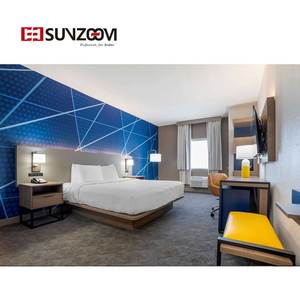
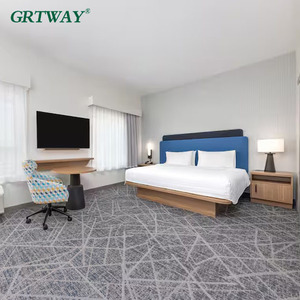
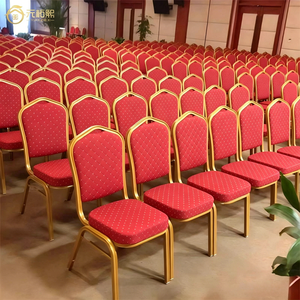
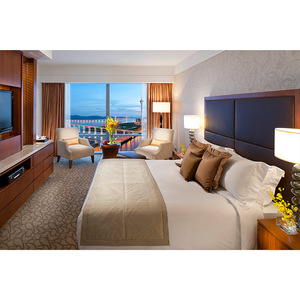
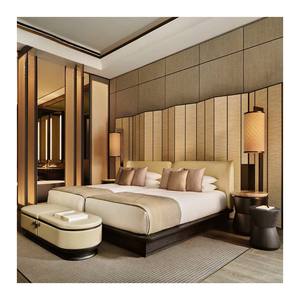
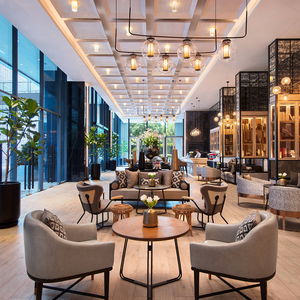
The French hospitality market represents one of the world's most sophisticated procurement landscapes. Driven by stringent European Safety Directives, historical architectural constraints, and evolving aesthetic demands—ranging from Parisian Haussmannian boutique conversions to Mediterranean coastal resorts along the Côte d'Azur—furnishing a hotel in France requires significantly more than supplying standard casegoods. It demands a rigorous synthesis of technical compliance, spatial ergonomics, material sustainability, and seamless international supply chain execution.
As leading Chinese original equipment manufacturers (OEM) and original design manufacturers (ODM) specializing in export-grade contract furniture, top-tier factories in regions such as Foshan and Ningbo have restructured their engineering methodologies. Today’s top exporters do not merely manufacture; they provide complete technical engineering solutions tailored to the strict regulatory framework enforced by French local authorities (Commission de Sécurité) and interior design firms across Paris, Lyon, and Marseille.
Information Gain Insight: Sourcing hotel furniture from China for French projects requires balancing cost efficiency with strict EU compliance. Key considerations include the French M1 fire safety classification (NF P92-507), low-formaldehyde emissions under EU E1 standards, and EPR Éco-mobilier registration for environmental accountability.
When French hoteliers and procurement agencies (such as Accor Procurement or independent project management firms) source FF&E (Furniture, Fixtures, and Equipment) from China, non-negotiable compliance standards govern the contract:
Fire Safety Regulations (NF P92-507 & EN 1021-1/2): In public establishment settings in France (ERP - Établissements Recevant du Public), upholstered furniture must comply with strict fire retardancy norms. Foam cores and covering fabrics must undergo testing to achieve the French M1 flame-retardant classification or meet European standards EN 1021-1 (ignition source: smouldering cigarette) and EN 1021-2 (ignition source: match flame equivalent). Premier Chinese manufacturers maintain direct partnerships with accredited testing laboratories like SGS and TÜV Rheinland to issue recognized certificates prior to shipping.
Formaldehyde Emissions & Chemical Safety: The French Decree No. 2011-321 requires strict labeling of volatile organic compound (VOC) emissions for building and furnishing products. All engineered wood substrates (MDF, HDF, Blockboard) exported to France must adhere to EU E1 or E0 emissions standards, utilizing water-based adhesives and zero-VOC poly-urethane or UV lacquer systems to safeguard indoor air quality.
EPR Éco-mobilier Compliance: Under the French Environmental Code, producers and importers of furniture are legally bound to contribute to the end-of-life management of furniture waste. Leading Chinese export partners work in tandem with French importers to provide detailed material breakdown sheets (wood mass, metal weight, foam volume) enabling accurate eco-contribution tax declarations.
Unlike North American hotel properties characterized by expansive footprints, European—and specifically French—hotel real estate frequently presents compact room dimensions. In historical districts of Paris, Bordeaux, or Strasbourg, guestrooms often average between 14 to 22 square meters. This demands tailored FF&E solutions:
Multi-Functional Casegoods: Modern guestroom suites require integrated solutions where a single wall-mounted headboard structure incorporates reading lamps, integrated AC controls, nightstands, and concealed cable management. Wardrobes are designed with slim profiles (450mm depth instead of 600mm) incorporating drop-down hanging rods and pull-out luggage racks.
Acoustic & Thermal Performance: Urban French hotels emphasize guest tranquility. Leading Chinese factories integrate acoustic felt backings and high-density foam padding within wall-panel headboards, dampening sound transmission between adjacent guestrooms.
Understanding the aesthetic shifts across major French hotel sectors to ensure maximum guest satisfaction and asset appreciation.
Prevalent in Paris and Lille. Features deep velvet upholsteries, brushed brass accent trims, warm walnut veneers, and soft curved profiles that complement historic plaster mouldings and herringbone oak floors.
Dominant across Côte d'Azur, Nice, and Cannes. Emphasizes natural solid ash, bleached oak, UV-resistant outdoor rope weaving, breathable natural linen textiles, and light organic colour palettes.
Specific to ski resorts in Courchevel, Chamonix, and Megève. Requires heavy-duty solid timber construction, thermally treated woods, textured shearling fabrics, and high-load-bearing structural frames.
To guarantee zero-defect execution upon arrival at French ports (Marseille-Fos or Le Havre), premier Chinese factories employ a rigorous 5-stage manufacturing and Quality Control (QC) methodology tailored for overseas engineering projects:
Prior to mass production, a complete 1:1 scale mock-up room is engineered. French architects and procurement teams inspect jointing, finish gloss levels, drawer slide smooth action, and cable tray alignment either on-site in China or via live digital video audits.
Timber used for European exports undergoes computer-controlled kiln drying to reduce moisture content down to 8%–10%. This prevents cracking, warping, or joint separation when furniture transitions from humid marine shipping containers to heated indoor French hotels.
Furniture items receive 5-layer corrugated carton wrapping, reinforced EPE corner protectors, and sealed waterproof plastic inner membranes. Heavy stone vanity tops are crated in fumigated solid wooden boxes compliant with ISPM 15 standards for smooth customs clearance.
Essential answers for French hotel developers, project managers, and interior designers sourcing contract furniture from China.
Top-tier exporters source raw fabrics and foam treated with specialized flame-retardant additives. Samples are submitted to certified laboratories (SGS/TÜV) to obtain official testing certificates verifying compliance with NF P92-507 (M1 classification) and European EN 1021-1/2 standards prior to bulk fabric cutting.
Standard engineering shop drawing approval and mock-up room production take 2 to 3 weeks. Mass production requires approximately 35 to 45 days. Ocean freight from Chinese ports (Shenzhen/Ningbo) to Le Havre or Marseille takes around 28 to 35 days, resulting in a total timeline of 10 to 12 weeks from deposit to port arrival.
Yes. All casegoods, headboards, wardrobes, and upholstered seating are manufactured to custom shop drawings (CAD/3D). Dimensions, desk depths, and storage configurations are tailored precisely to match spatial layouts, structural columns, and low-ceiling historical buildings in France.
Furniture exported from China to France is subject to standard EU common customs tariffs (typically 0% to 5.6% depending on the specific HS Code) plus French VAT (20%). Exporters can work under DDP (Delivered Duty Paid) terms via licensed French customs brokers, handling import clearance, tax filings, and Éco-mobilier eco-contribution declarations seamlessly.
Leading Chinese contract furniture manufacturers provide a standard 5-year commercial warranty against structural defects in solid wood frames, metal joinery, and internal hardware, along with a 2-year warranty on surface finishes and upholstery resilience under normal commercial hotel operation.
Connect with our senior engineering team today to receive CAD shop drawing support, material swatch kits, M1 fire safety certificates, and a comprehensive factory-direct quotation.